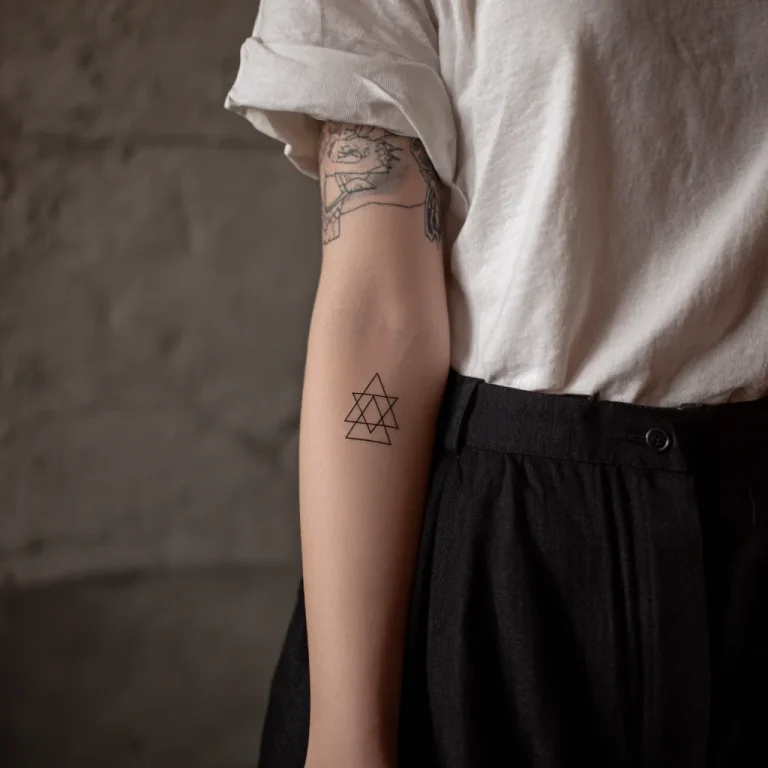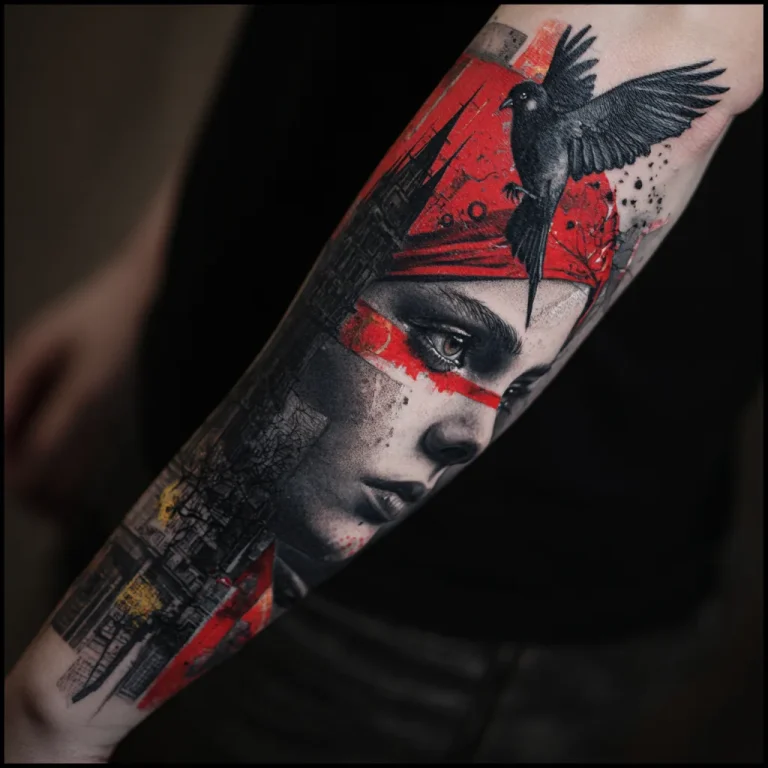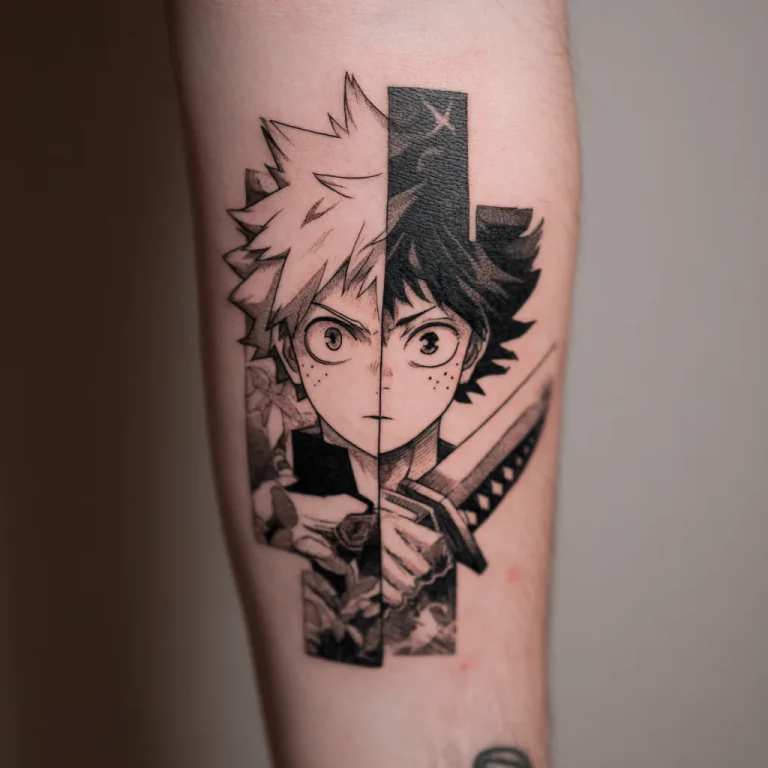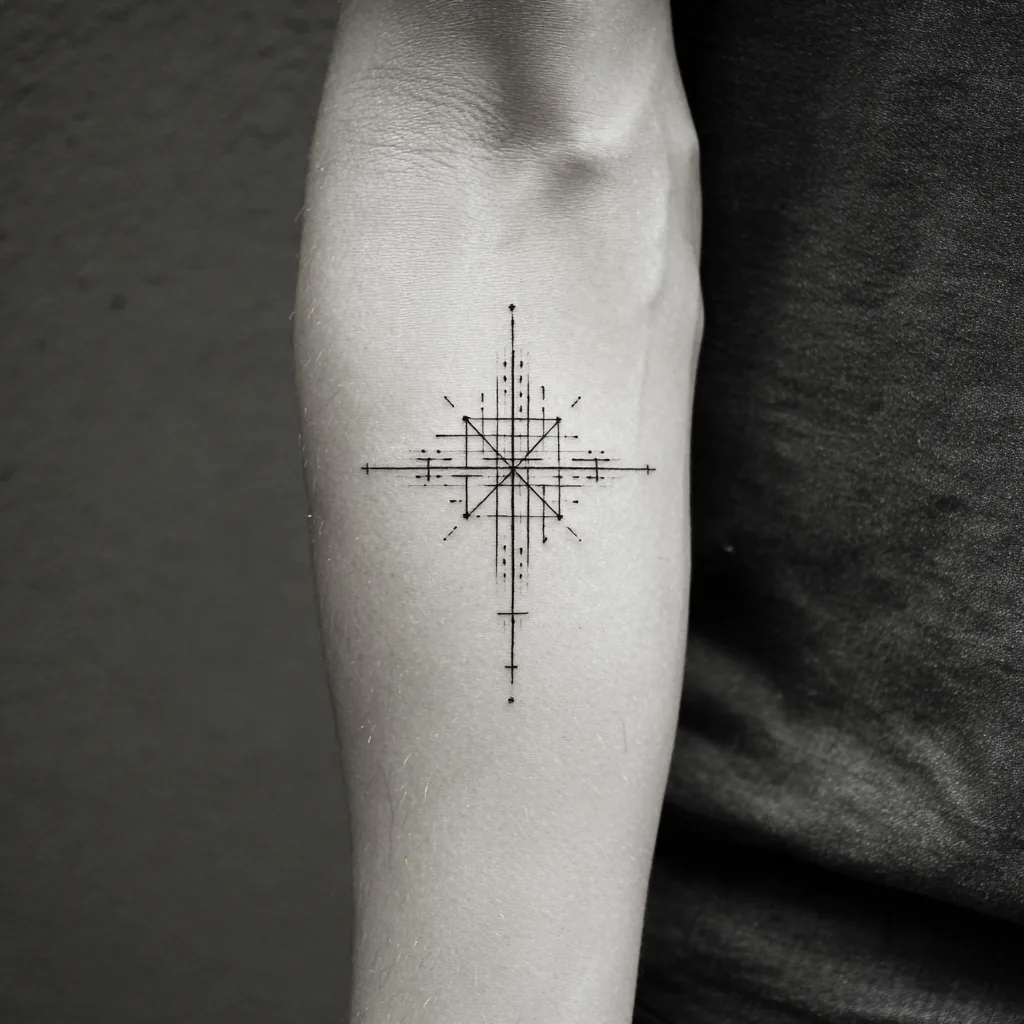
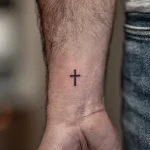
Cross tattoo, drawn flat before it ever touches skin.
The cross tattoo. It’s one of the most timeless designs you’ll see in any tattoo shop, from delicate minimalist lines to bold elaborate pieces. It’s been a symbol of faith, sacrifice, and resilience for centuries, but its meaning runs deeper than religion. Let’s break it down.
One thing before we go further: the cross is not one design. A plain Latin cross, a Celtic cross, an ankh, and an upside-down cross are four different tattoos that say four different things. Pick the wrong one and you’re explaining yourself for the rest of your life. So let’s go version by version.
The Symbolism of the Cross
At its core, the cross is about connection: the vertical line reaching to the heavens, the horizontal line grounding us to the earth. Whether you’re getting inked for spiritual reasons or personal ones, here’s what a cross tattoo can represent:
- Faith: The obvious one. For Christians, it’s a symbol of Christ’s sacrifice and their personal connection to God.
- Strength: Endurance through hardship. For many, the cross represents overcoming challenges and standing tall no matter what.
- Memorial: A cross tattoo can honor a loved one who’s passed away. Simple, powerful, and deeply personal.
- Balance: Not all crosses are tied to religion. For some, it’s about finding harmony between opposing forces in life.
Here’s where people get it twisted. A traditional symbol meaning and a personal meaning are two different things, and you don’t need permission for the second one. If a plain cross means “my grandfather” to you and nothing else, that’s a complete reason to get it. Your artist doesn’t need the theology. They need the design brief.
Cross Tattoos Beyond Christianity
While the Christian cross is the most well-known, other cultures and traditions use cross-like symbols with their own meanings:
- Celtic Cross: A blend of Christianity and ancient Celtic spirituality, often paired with intricate knotwork. The ring around the intersection is usually read as eternity or the cycle of life.
- Ankh: The Egyptian cross, symbolizing life and immortality. It’s the oldest of the bunch by a wide margin and reads clean as a small tattoo because of its simple loop-and-bar shape.
- Maltese Cross: Four arrowhead points meeting at the center, associated with the Knights of Malta and later with firefighters. It symbolizes courage, honor, and sacrifice.
These variations give the cross a universal appeal. It’s not just about faith; it’s about what resonates with you. The catch is that each version brings its own baggage, and people will read it whether you like it or not. Know what you’re signing up for.
The Upside-Down Cross Isn’t What Most People Think
This one deserves its own section because the internet gets it wrong constantly. An inverted cross is widely read as anti-Christian or satanic, and sure, some people wear it that way on purpose.
But historically, the upside-down cross is the Cross of St. Peter. According to Christian tradition, Peter asked to be crucified upside down because he didn’t consider himself worthy to die the same way as Christ. So in Catholic symbolism it’s a mark of humility, not rebellion. The Pope even uses it on papal regalia.
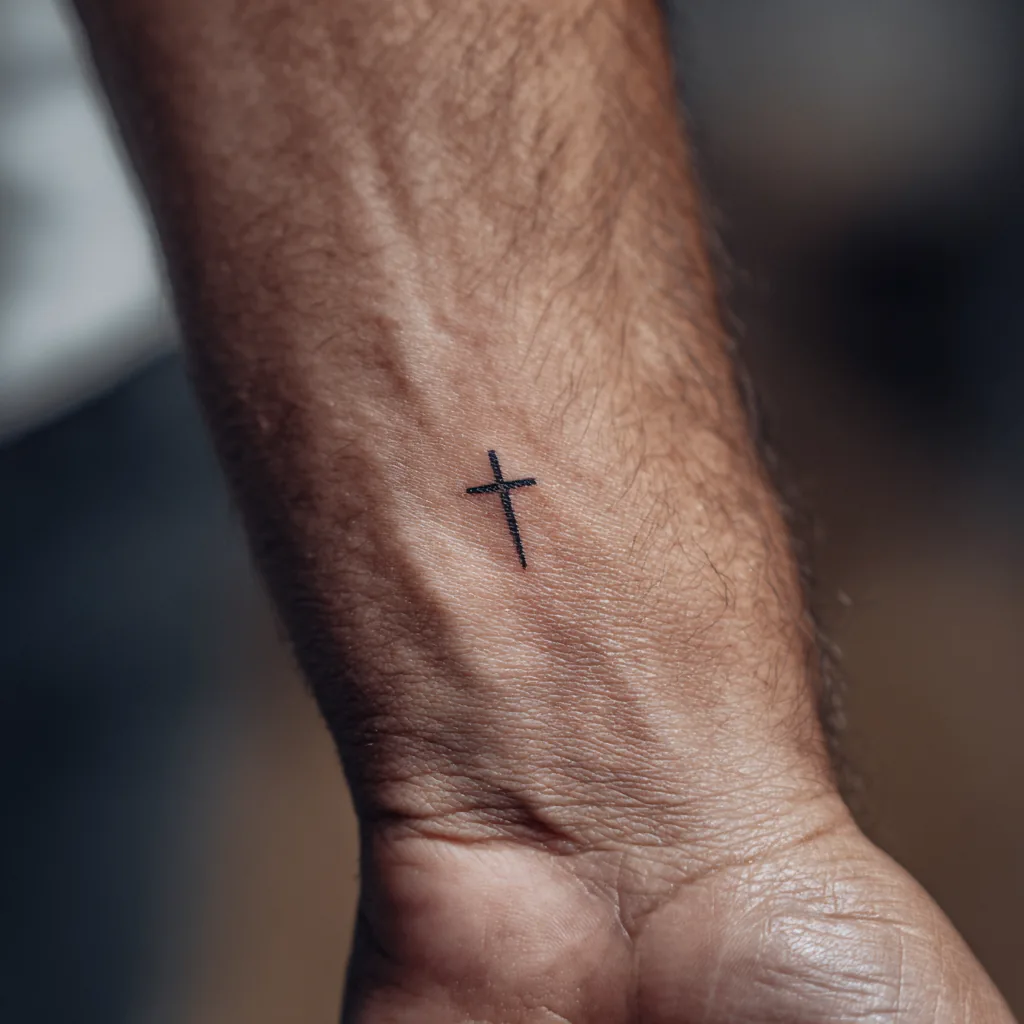
Practically speaking? If you get one, expect to explain it. A lot. If that conversation is the point, go ahead. If you just like the shape and don’t want to field questions at every family dinner, maybe pick something else. Either way, know the answer before someone at a barbecue asks it for you.
A Story from the Chair
I remember tattooing a cross on this guy’s forearm once. He walked in looking nervous, fidgeting with his wallet, and said, “I want something to honor my brother.”
His brother had passed away the year before in a car accident. He wanted a simple black cross, nothing fancy. Halfway through, he told me they used to joke about getting matching tattoos but never got around to it.
When I finished, he stared at the tattoo for a solid minute before nodding. “Now he’s with me,” he said.
That’s the power of a cross tattoo. It’s more than just ink. It’s a connection, a memory, a story.
Popular Cross Tattoo Designs
If you’re considering a cross tattoo, here are some ideas to inspire you:
- Simple Line Cross: Minimalist and elegant. Works anywhere: wrist, forearm, even behind the ear. Keep the line weight consistent or it reads wobbly from two feet away.
- Celtic Cross: A blend of intricate designs and spiritual meaning. The knotwork needs room. Shrunk down to a coin, that detail turns to mush.
- Cross with Flowers: Roses, lilies, or cherry blossoms intertwined with the cross for a softer, more personal touch. If you want blooms with real bite, see what cherry blossoms actually mean before you commit.
- 3D Cross: For a bold, eye-catching design that pops off your skin. It needs shading and enough scale to sell the illusion. Tiny 3D crosses just look blurry.
- Cross with a Name or Date: Perfect for memorial tattoos. Ask for the lettering and the cross to be drawn together, not slapped side by side.
- Upside-Down Cross: Controversial and edgy. See above before you commit.
Where a Cross Tattoo Actually Works
The beauty of the cross is its versatility, but “it works anywhere” is what artists say when they don’t want an argument. Here’s the real breakdown.
A small plain cross sits well on the inner forearm, the collarbone, or behind the ear. Behind the ear is subtle and easy to cover with hair. Fingers are the trap: side-of-finger crosses fade and blur fast because that skin takes a beating and doesn’t hold ink well.
Bigger crosses need a body part that can carry the proportions. Upper back and chest suit a Celtic cross with full knotwork. The forearm is the sweet spot for something in the middle, big enough to read, visible when you want it. And if you want a memorial piece that runs taller than it is wide, the spine or the back of the calf gives you length without crowding.
The cross is naturally long and narrow, so ask your artist to work with that shape instead of forcing it into a square space. That one conversation saves a lot of redraws.
FAQ: Cross Tattoos
Q: Do cross tattoos have to be religious?
A: Not at all. While many people get them for spiritual reasons, a cross can symbolize anything from balance to resilience. The meaning you give it is the one that counts.
Q: Where’s the best placement for a cross tattoo?
A: It looks great on forearms, wrists, backs, collarbones, and even behind the ear. Skip the finger sides if you want it to hold up. See the placement section above for the sizing details.
Q: How much does a cross tattoo cost?
A: A small, simple cross can start at $50 to $100, but larger or more detailed designs run $200 to $500 or more. Shop minimums vary by city, so a $60 design can still cost you $100 at the door. For a realistic breakdown, read how much a tattoo actually costs.
Q: Are cross tattoos cliché?
A: Only if you let them be. A trite cross is one copied off a flash sheet with no thought. A well-drawn design with personal meaning is never cliché, no matter how many people have one.
Q: Is an upside-down cross satanic?
A: Not by default. It’s the Cross of St. Peter, a traditional symbol of humility. Plenty of people wear it as a rebellion marker too. Both readings exist, so decide which one you’re wearing.
Supporting Resources
- Cross Tattoo Ideas and Meanings: Tattoo Designs
- Celtic Cross Inspiration: Celtic Tattoo Art
- Tattoo Placement Tips: Inked Mag
- Faith and Ink, Grief and Memorial Work: meet the guy writing this, Jax Ransom
Final Thoughts
A cross tattoo is as versatile as it is meaningful. Whether it’s a reminder of your faith, a tribute to a loved one, or a symbol of your inner strength, the cross speaks volumes without saying a word.
So before you sit down: decide which cross you actually want, decide what it means to you, and decide whether you’re okay explaining that to strangers. Get those three answers straight and you’ll walk out with something you don’t have to defend. That’s the whole game.
Related Posts:

About the Author