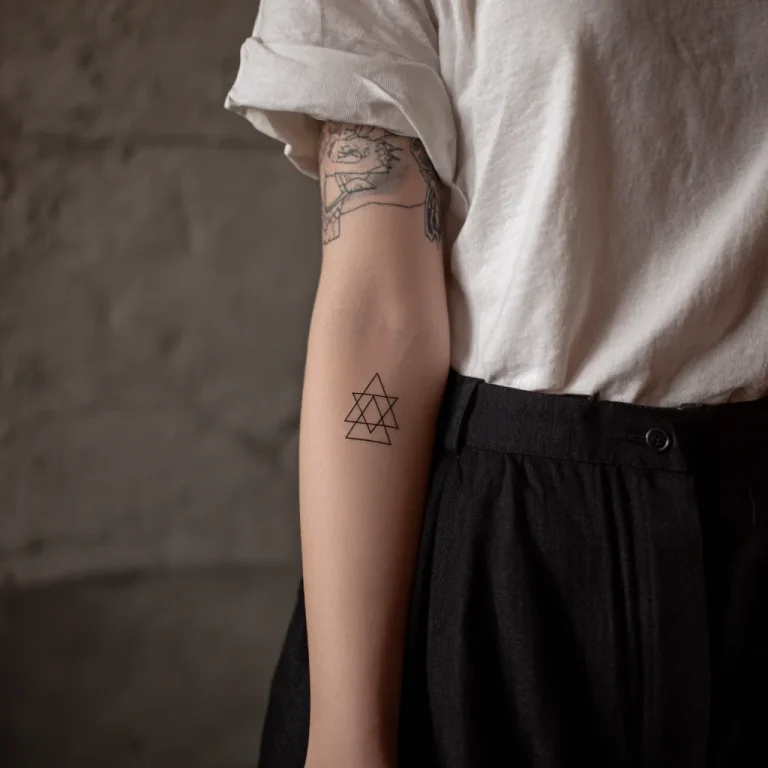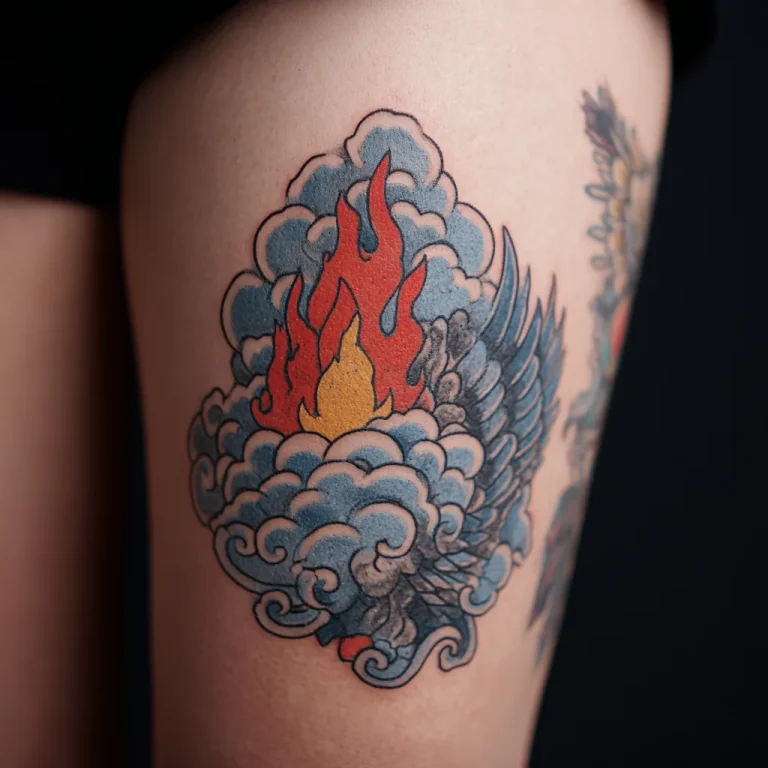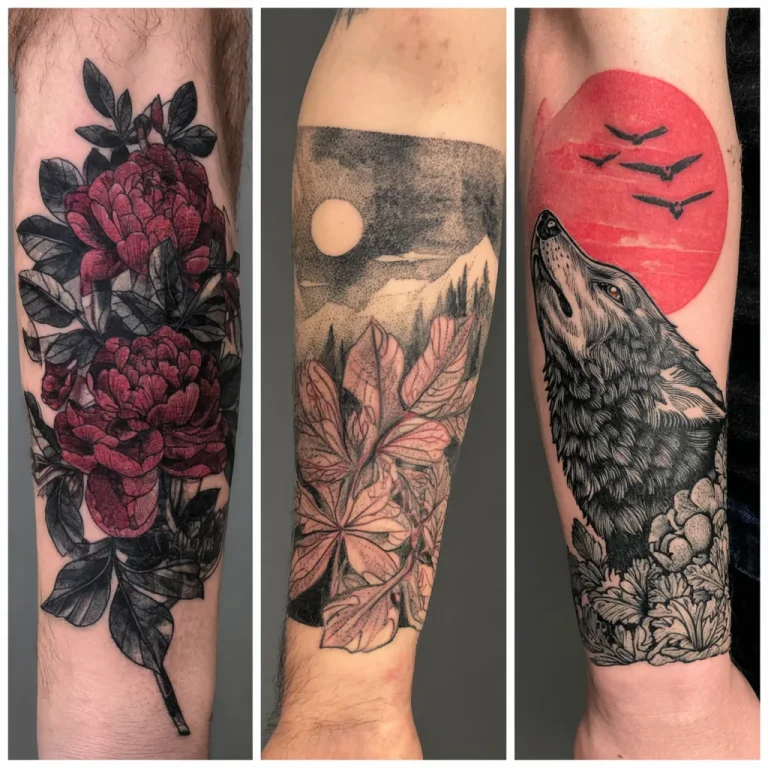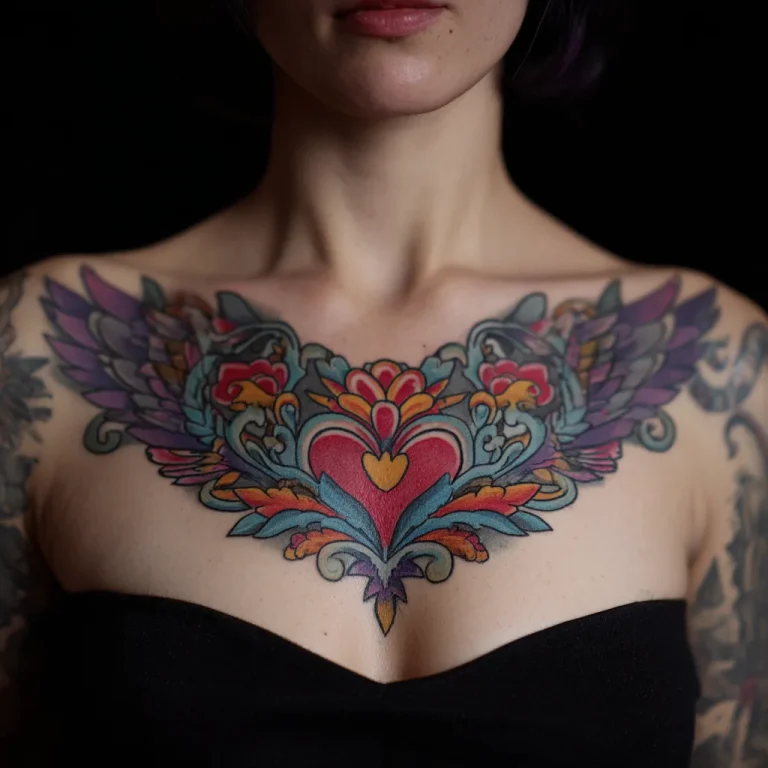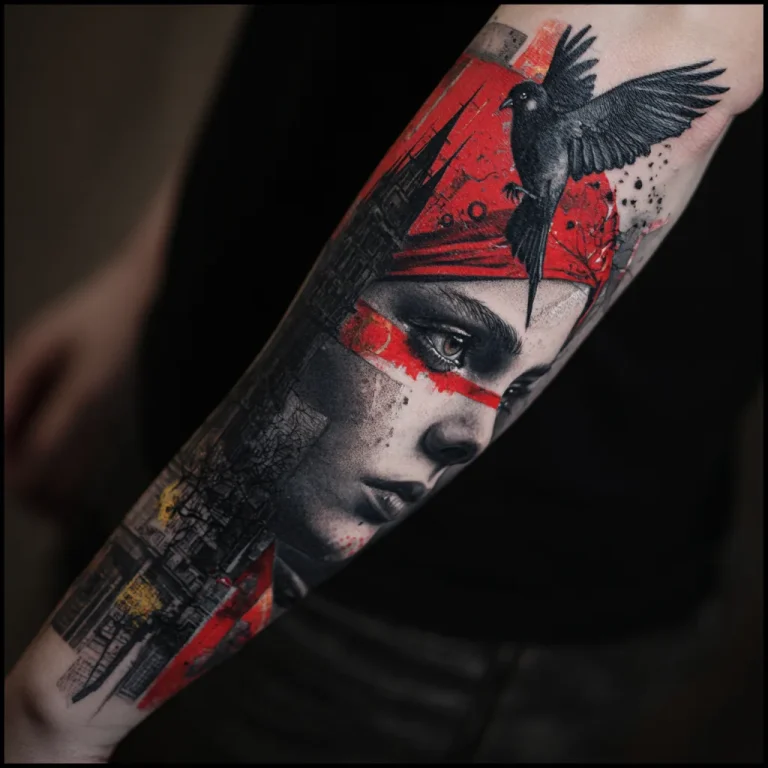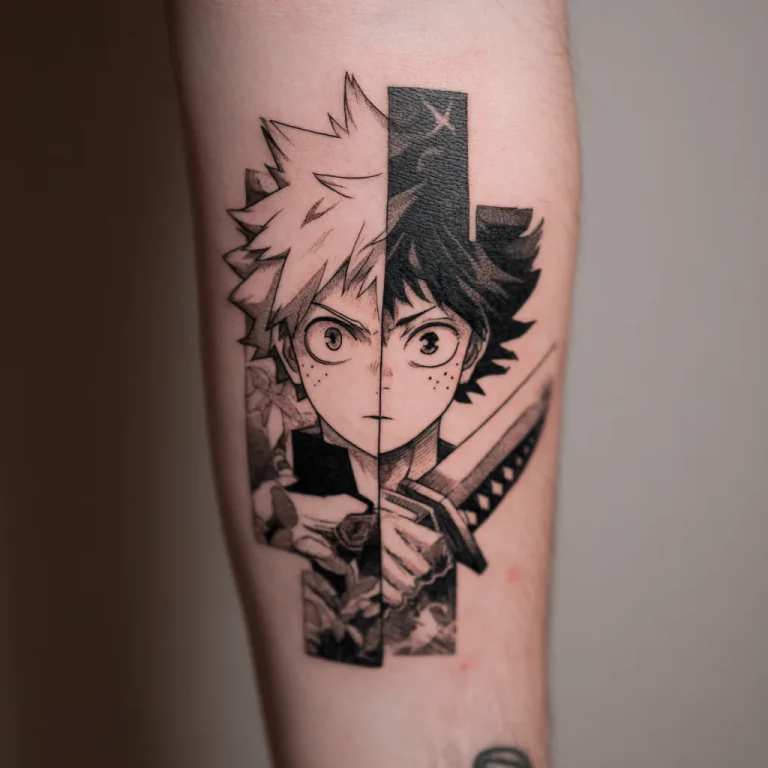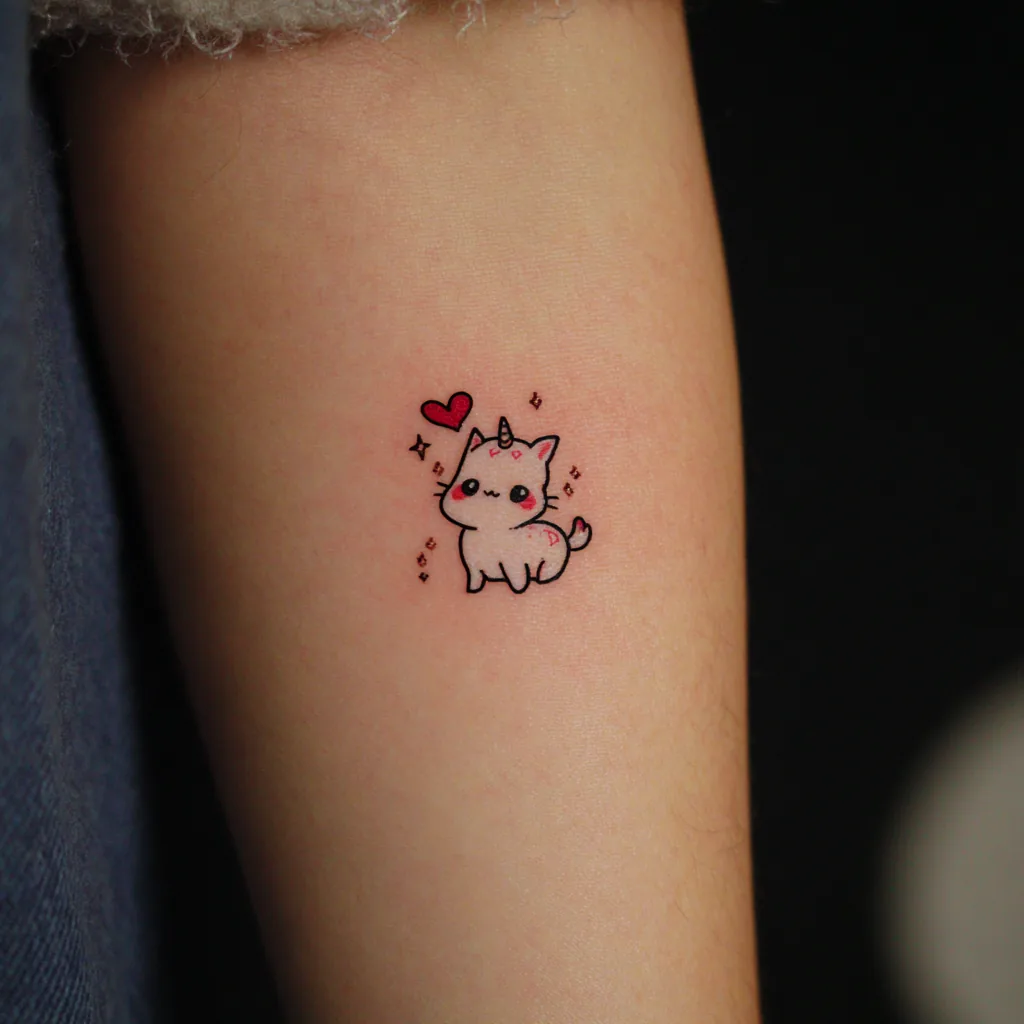
Cute small tattoos, black and grey, shot in the chair.
Here’s the question nobody asks out loud at the counter: will it still look like this in five years? Small tattoos are the most requested thing in my chair and the most frequently regretted, and it’s almost never the design. It’s the size, the spot, and the fact that nobody told them a 2cm outline on a finger has a shelf life.
So this isn’t a mood board. It’s 17 small tattoo ideas for women that actually hold up, where each one belongs on a body, what fades first, and what to say to your artist so you don’t end up with a grey smudge where your daisy used to be.
What Counts as a Small Tattoo (And Why Size Isn’t Just Size)
Roughly: anything under 3 inches, or anything that fits under a watch strap. But the number that matters isn’t the width, it’s the line weight. A single-needle line is about 0.25mm. Skin spreads ink outward over years, so a hairline that starts crisp slowly softens into a shadow. That’s fine on a forearm. It’s a disaster on a knuckle.
The rule I give people: the smaller the design, the simpler the shape and the thicker the minimum line. A tiny heart with a clean outline survives. A tiny heart with three shades of shading and a highlight does not.
17 Small Tattoo Ideas for Women
Grouped by what they’re for, because “meaningful” and “just cute” are different shopping trips.
Meaningful and Minimal
- Constellation: A real star pattern, not a random scatter. Ask for dots sized to stay dots and thin connecting lines, or skip the lines entirely. Wrist and inner forearm hold up best. More on star designs here.
- Coordinates: Where you were born, met, or got out. Numbers and letters under 4mm blur, so keep it to a short set and put it somewhere flat.
- A date in roman numerals: The classic. Make sure your artist spaces the characters for how they’ll settle, not how they look fresh.
- Initials, one or two letters: Fine in a serif or script on the inner arm. Terrible on a finger, where they’ll merge into a line within a couple of years.
- A single word: Short words in clean lowercase hold. Long words shrink into illegibility. If your word is more than six letters, go bigger or pick a symbol.
- Birth flower: Each month has one, which makes it personal without being a name. Simple petal shapes only, no fine veining at this size.
Delicate and Pretty
- Tiny rose or a single stem: A bud reads better small than a full open bloom. Rose meaning and styles if you want the symbolism sorted first.
- Butterfly, one wing or full: Beautiful, and one of the fastest-fading small designs if you go too dainty. Ask for solid black edges, not wispy ones.
- Fine line vine or branch: Wraps a forearm or ankle and grows with the body instead of fighting it. Best done in one session, one line weight.
- Small moon phase: Three to five phases in a row, on the inner arm or behind the shoulder. Each phase needs enough space to stay a shape.
- Daisy or lotus: Simple petals, no gradient. Skip the soft shading unless you’re fine with it fading to a grey wash.
- Tiny bee or ladybug: Small, solid, and forgiving. One of the few designs that genuinely works at 1cm.
Simple Symbols
- Arrow: Clean, directional, and reads at almost any size. Point it somewhere on purpose, not accidentally at your elbow crease.
- Infinity or wave: Two strokes, no fill. Hard to ruin, easy to cover if you change your mind.
- Tiny heart outline: The most-covered-up small tattoo I see. Not because it’s bad, but because people get it at 19 in a spot they can’t hide at 30. Get the outline, skip the fill.
- Single star or sparkle: One clean four-point star behind the ear or on the wrist. Four points, not twelve.
- Eye or evil eye: Works small because the shape is bold. Detail inside the iris is the part that vanishes, so keep it simple.
That’s 17. Pick two you like before you book, not one. Artists do better work when they can show you a comparison on your own skin.
Where to Place a Small Tattoo (Ranked by How Long It Stays Crisp)
This is the part that decides whether you love it in year five. Skin on the outside of joints and hands turns over fast. Skin on the flat of an arm or back turns over slow.
- Inner forearm: The best small-tattoo real estate on the body. Flat, low sun exposure if you dress normally, easy to show or cover.
- Upper back or shoulder blade: Holds detail better than anywhere else and hides under almost everything.
- Ankle: Good for symbols and small florals. Expect it to soften faster than an arm and to rub against shoes and socks.
- Collarbone: Delicate and personal, but the skin is thin. Ask for a slightly bolder line than you think you want.
- Ribs: Great for quotes and symbols, and one of the more painful spots. It’s also a spot most people never see, which is either the point or a waste, depending on you.
- Behind the ear: Works for a single tiny shape. It’s also high-friction if you wear glasses or have long hair, so it fades early.
- Finger and hand: The honest answer is that these blur. Not maybe. A ring of tiny letters or a delicate shape on a knuckle will lose its edges within a couple of years. If you want one anyway, get it bolder than feels right.
One rule that saves people: put the tattoo where you’ll actually see it. A tiny design on your back that you forget about isn’t a mistake, but most first-timers want the reminder in their line of sight.
What Small Tattoos Cost (And Why the Minimum Hurts)
Most shops have a minimum, usually $80 to $150, sometimes more in cities. A 20-minute tattoo still costs you the minimum, because the setup, the stencil, and the sterilisation take longer than the ink. Expect $100 to $250 for a simple small piece from a decent artist. Fine line specialists charge more, and they should.
The cheap option is a kitchen-table machine and a friend who watched a video. I’ve seen the cover-ups. Full cost breakdown here if you want the real numbers.
What to Ask Your Artist Before You Book
- “Will this line hold at this size?” If they say yes without pausing, ask again.
- “Can you draw it at the real size before we start?” A design that looks great on a tablet can look like a dot on your wrist.
- “What’s the minimum line weight you’ll use here?” Good artists have an answer.
- “How would you change this in ten years if I want to add to it?” Small tattoos are often the first of several. Plan the neighbourhood, not just the house.
And if they offer to shrink the design to fit your budget rather than telling you what size it needs to be, walk. That’s the conversation where regrets are born.
The Bottom Line
A small tattoo isn’t a smaller decision, it’s a tighter one. Fewer lines, less room for error, and less forgiveness from your skin. Pick a simple shape, put it somewhere flat, pay for a real artist, and get the line bolder than your Pinterest screenshot. Do that and it’ll still read clean when you’re old enough to complain about the weather.
Related Posts:


About the Author