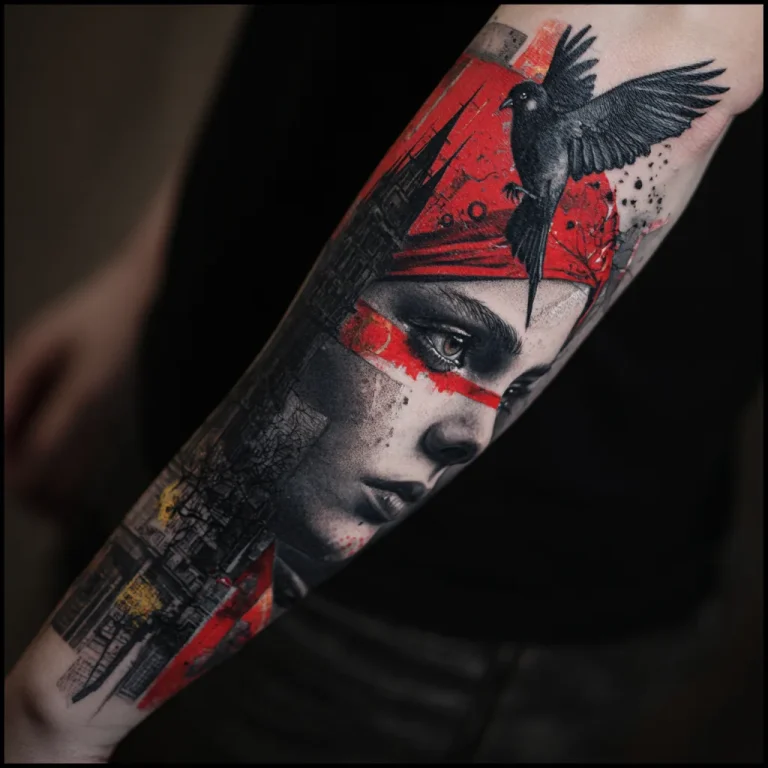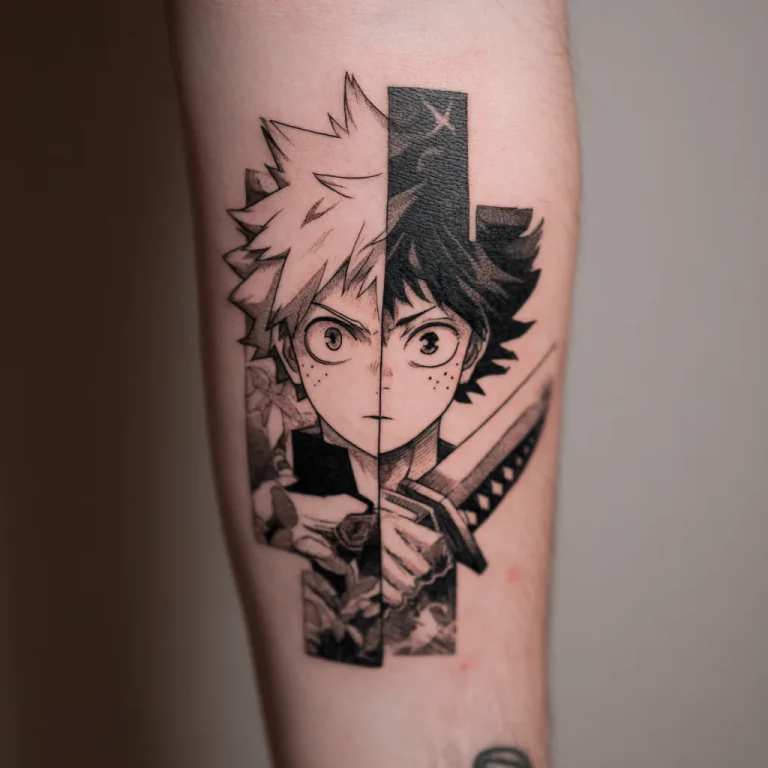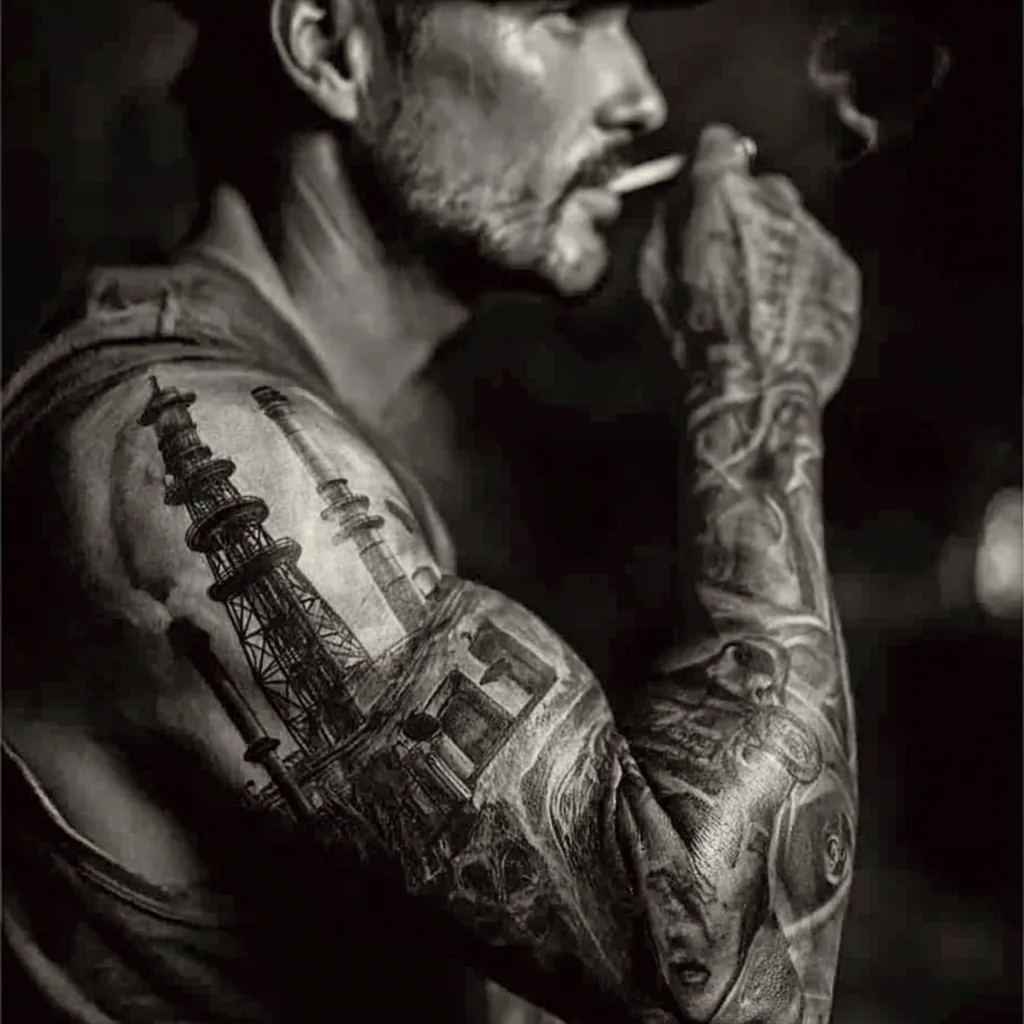
Tattoo ideas for men, black and grey, shot in the chair.
Most guys walk in asking for a forearm tattoo because it’s the spot they see on everyone else. Fair enough. It’s visible, it’s got room, and it hurts less than your ribs. But the forearm is also the placement that punishes a lazy design the fastest. A bad piece on your back hides. A bad piece on your forearm sits at eye level every time you shake someone’s hand.
So here’s what actually matters before you book: which side of the arm, what shape the design has to be, what it costs, and what to say to your artist so you don’t end up with a sticker.
Why the Forearm Works (and Where It Bites Back)
The forearm earns its popularity honestly:
- Visibility: Easy to show off, easy to cover with a sleeve. You control the audience.
- Size and shape: The natural taper from elbow to wrist suits long vertical pieces and compact ones alike.
- Pain: Meatier than ribs, shins, or the ditch, which makes it a realistic first tattoo. The wrist end and the elbow crease are the sharp spots.
- Symbolism: A forearm piece reads as deliberate. It’s meant to be seen.
The catch is sun. Your forearm sees more daylight than almost any other part of you, and UV is what turns crisp black into gray mush and smears fine detail over a decade. If you’re not going to sunscreen it, plan a bolder design with heavier lines. That’s not me being dramatic, that’s just how ink ages in the open.
Inner vs Outer Forearm: Pick Your Side
This is the decision most guys skip, and it changes everything about what design works.
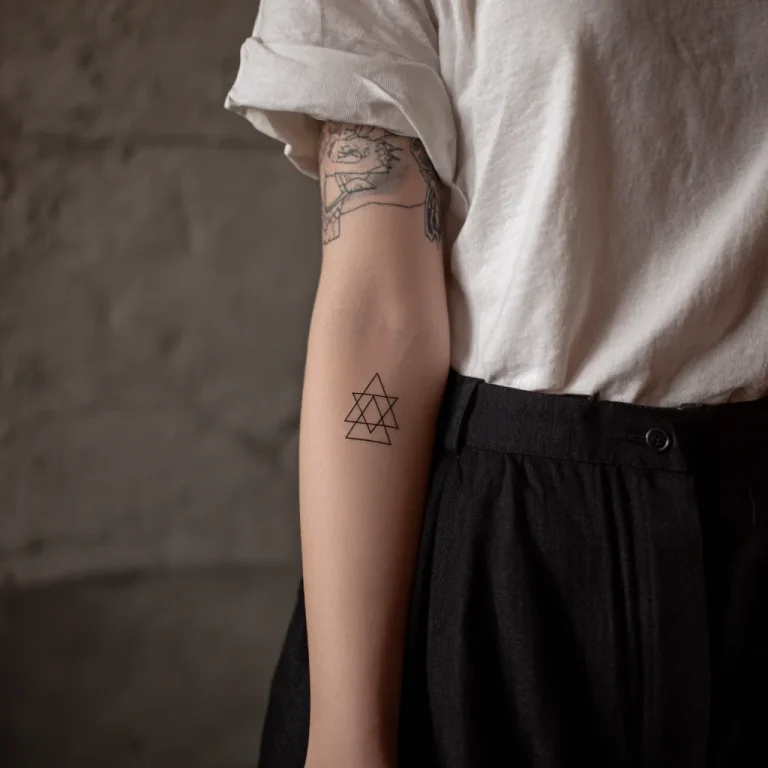
- Inner forearm: The flat, softer side. More protected from sun, so it holds detail longer. Best for script, fine line, small symbols, anything you want to look at yourself. It’s also the side you flash when you gesture, so it gets seen more than people expect.
- Outer forearm: The sun-facing side. Bolder and more public. Great for strong silhouettes, big animals, traditional pieces. Detail here fades faster, so don’t cram a portrait into a space the sun will eat.
- Full wrap: The design circles the arm. This only works with pieces built for it, like geometric bands, snake bodies, or a scene that continues around. A wrap with no plan for the seam looks like two tattoos that met by accident.
Inner or outer, the design has to follow the taper. Your arm is not a flat sheet of paper, and a design drawn on a rectangle will look warped once it’s on skin. Bring a reference, not a finished file, and let your artist redraw it for the curve.
What Makes a Great Forearm Tattoo?
Flow. The design should move with the arm, whether it’s a vertical piece running toward the wrist or a horizontal one wrapping around. Good artists design for the body part, not for a frame.
Line weight matters more here than people think. Thin lines on a high-sun area blur and spread over time. If you want fine line on the forearm, put it on the inner side and understand it’s a shorter-lived look. If you want something that still reads in fifteen years, go heavier.
And scale is the other killer. A design that’s too small for the space looks lonely. A design that’s too big fights the wrist and elbow. Your artist should be able to sketch it directly on your arm before anyone picks up a machine.
7 Forearm Tattoo Designs for Men That Actually Work
- Sleeves: Start at the forearm and let it grow. Plan the whole arm now, even if you only ink the bottom third today.
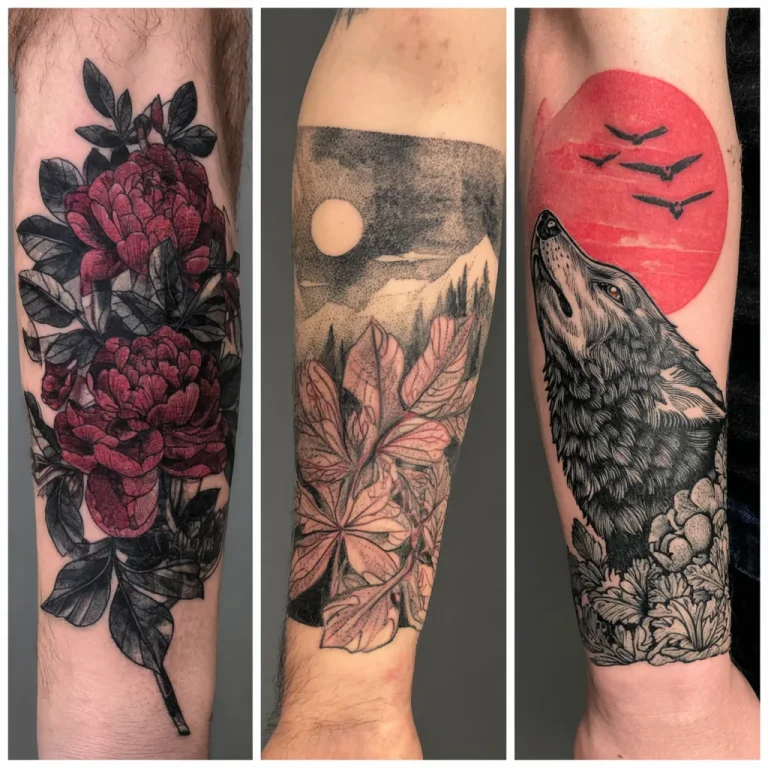
- Animals: Wolves, lions, eagles. Bold shapes that hold up in sun. See what your wolf is actually saying before you commit.
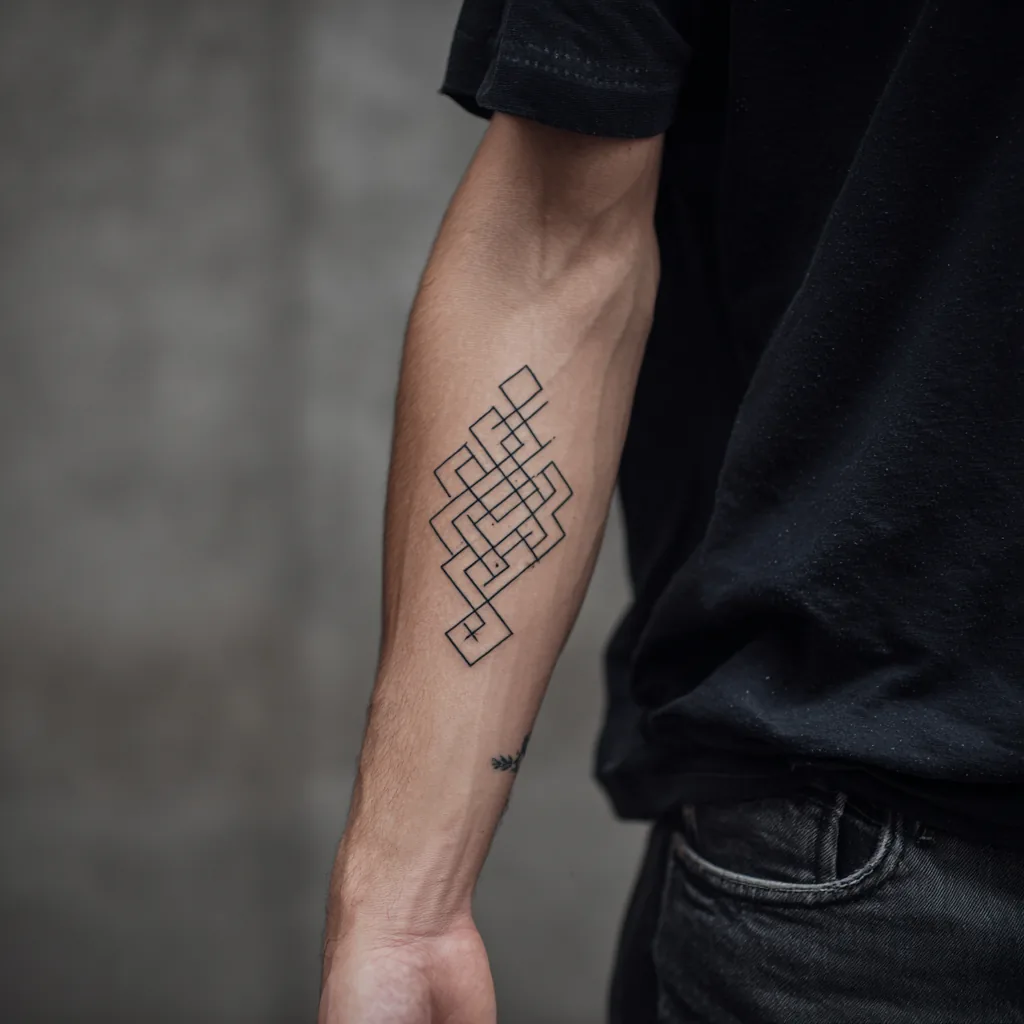
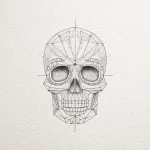
- Geometric patterns: Clean lines and sharp shapes wrap the arm better than almost anything. Geometric work punishes a shaky hand, so pick an artist who does it constantly.
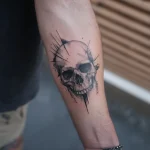
- Skulls: Classic for a reason. Strong silhouette, reads from across the room. Skull pieces age well when the shape is simple.
- Quotes or text: Powerful if the words are short and the lettering is drawn by a tattooer, not typed into a generator. Long paragraphs become gray lines in a few years.
- Nature scenes: Mountains, forests, waves. These work best as a vertical piece running down the arm, not a square stamped on the middle.
- Abstract art: Room to experiment, as long as it’s designed for the arm and not borrowed from a canvas.
What Do Forearm Tattoos for Men Cost?
Real talk: prices depend on your city, the artist’s rate, and how much detail you’re asking for. A small inner-forearm piece might run a shop minimum. A half-forearm custom piece runs into the hundreds. A full wrap is a multi-session project and the bill adds up fast.
Don’t shop on price alone. The real cost breakdown matters more than the sticker number, and a cheap forearm tattoo is the one everyone sees. If budget is tight, get a smaller piece done well instead of a big one done badly.
What to Tell Your Artist
Bring three things to the consultation: a reference or two that shows the style you like, a rough size, and an honest answer about how visible you want it. Then shut up and let the artist redraw it for your arm. The reference is a starting point, not a blueprint.
Ask which side they’d put it on and why. Ask how it’ll age in sun. Ask what it looks like if you later want to build it into a sleeve. A good artist will answer all three without flinching.
Jax’s Take
Forearm tattoos are for the bold. They’re not just ink, they’re statements you wear every day, and the whole world gets to read them. So make sure the thing says something about who you are, not who was trending last month.
And don’t half-ass it. The forearm deserves a design built for its shape and its sunlight. Find an artist who knows how to use the space, and don’t settle for something you pulled off a search results page. This is your canvas. Make it count.
Related Posts:
About the Author