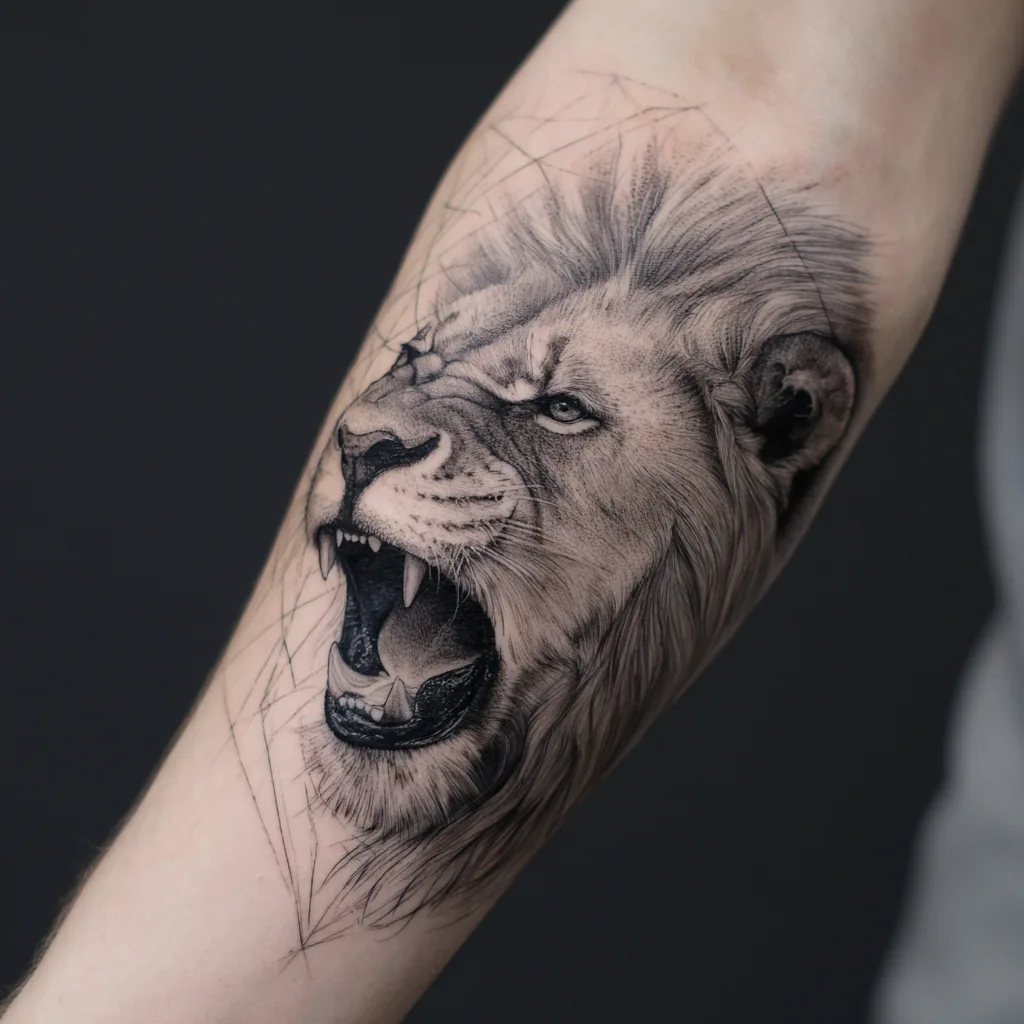
Lion tattoo, black and grey, shot in the chair.
Lion tattoos are the default choice for anyone who wants power on their skin. That’s the problem. Walk into any shop and you’ll see the same roaring profile, the same photoreal mane, the same crown floating above it. The lion isn’t the issue. It’s a genuinely strong design. The issue is that most people ask for “a lion” and never decide what their lion is doing.
So before you book, answer one question: is your lion roaring, resting, guarding, or looking back over its shoulder? That choice decides the style, the placement, and whether the piece still reads in ten years. Everything below hangs off it.
What Does a Lion Tattoo Symbolize?
Lions carry a lot of symbolic weight, which is why they’re one of the most requested designs. Here’s what they typically represent, and where each one actually comes from:
- Strength and power: Lions are apex predators, embodying physical and inner strength. The mane is the whole reason. It signals dominance, and it’s also the hardest part to tattoo well.
- Courage: Bravery in the face of a challenge. This is the meaning people reach for after a hard year.
- Leadership: Authority and control. The lion as king is a European heraldry idea as much as an African one. It shows up on crests and flags for a reason.
- Protection: Lions are fiercely protective of their pride, which makes them a symbol of loyalty and guardianship. This is the dad tattoo, and I mean that as a compliment.
- Family and pride: Lions live in close-knit groups called prides, symbolizing unity and family bonds. A lioness with cubs says this better than a male lion ever will.
One distinction worth making: these are traditional meanings, the ones a stranger might read off your arm. Your personal meaning can be anything. The guy who gets a lion because his grandfather was born in Sierra Leone and the guy who gets one because he likes how it looks are both getting good tattoos. Just know which one you are before the needle starts.
Why Are Lion Tattoos So Popular?
- Timeless appeal: Lions are classic symbols. They were on coats of arms before they were on forearms.
- Versatility: A lion can be hyper-realistic, geometric, traditional, or a three-line minimalist sketch. Same animal, completely different tattoo.
- Personal connection: Strength, family, leadership, survival. Lions resonate because people project their own story onto them.
- Visual impact: A mane, piercing eyes, and a powerful stance make for a stunning design. It’s also a lot of dark ink, which is why it holds up.
What Does a Lion Tattoo Actually Mean? The Real-World Answer
Here’s the part people don’t expect. In the wild, male lions are not the ones doing most of the hunting. The lionesses run the pride’s day-to-day survival, and the males mostly defend territory. The king-of-the-jungle image is largely a human invention, stitched together from heraldry and storybooks.
That doesn’t weaken the tattoo. It actually gives you a better one. If you want a design that says strength without leaning on the same roaring male head everyone else has, a lioness is the more honest symbol. She’s the hunter, the protector, and the reason the pride exists. Ask any artist who’s tattooed both. The lioness pieces tend to be the ones clients come back to talk about.
A Story from the Chair
A client came in wanting a lion tattoo on his chest. He’d recently become a father and wanted the lion to represent his new role as protector of his family.
We went with a realistic design: a lion’s face with a piercing gaze and a flowing mane. Behind it, we added subtle silhouettes of a lioness and two cubs, symbolizing his wife and children. The trick was keeping the cubs small and low-contrast so they read as a background rather than competing with the face. If they’d been the same weight as the mane, the whole thing would’ve turned into mush at thumbnail size.
When it was done, he said, “Now I feel like I’m carrying them with me everywhere.”
That’s the beauty of lion tattoos. They’re not just about strength; they’re about the responsibility and courage that come with it.
Popular Lion Tattoo Styles
Seven styles, and what each one actually costs you in time and detail:
- Realistic lion: Hyper-detailed work that captures every strand of the mane and every glint in the eye. This is the most expensive style and the least forgiving. Small realistic lions turn into gray smudges within a few years.
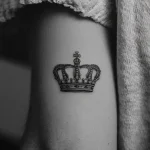
- Lion with crown: Leadership, authority, or a nod to royalty. Watch the crown’s line weight. A tiny crown on a huge mane looks like a hat, not a crown.
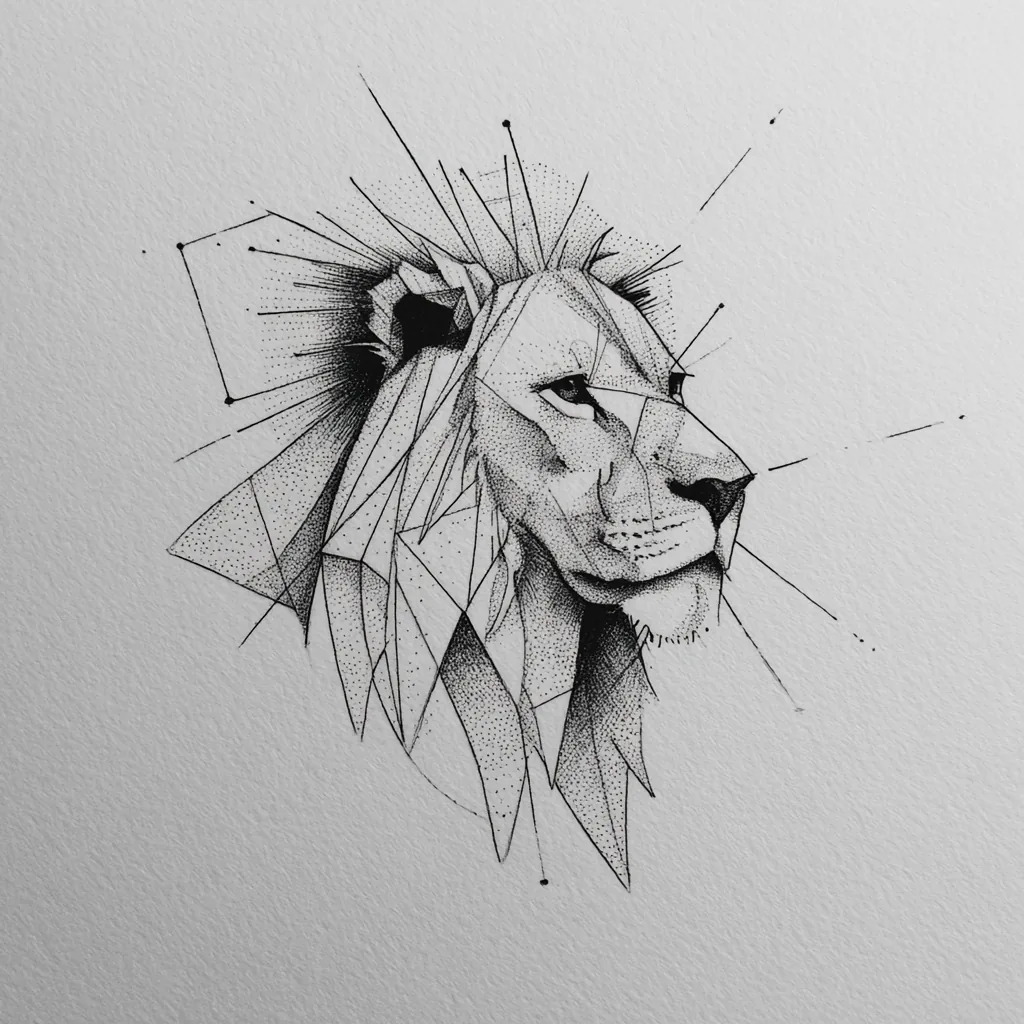
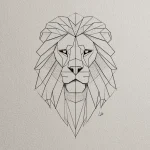
- Geometric lion: Sharp lines and abstract patterns for a modern twist. Great for people who want the symbol without the fur. The risk is lining up the geometry across a curved body part, which is where cheap work falls apart.
- Lion and cub: A touching representation of parenthood and family bonds. Keep the faces facing each other or the composition fights itself.
- Lion with flowers: Roses or peonies soften the design while highlighting the lion’s beauty. This one works surprisingly well for first tattoos because the flowers hide small mistakes.
- Minimalist lion: Clean, simple lines for a sleek, understated look. Best on a forearm or ankle. It’s also the style most likely to look like a logo on a coffee mug if the artist doesn’t put any personality in it.
- Lion in motion: Mid-stride or roaring for a dynamic, powerful image. Roaring lions need space. A roar on a wrist just looks like a yawn.
Where to Put a Lion Tattoo
- Chest: Perfect for large, bold designs that symbolize protection. The pectoral gives you a natural frame for a lion’s face, and the mane can spill into the shoulder cap if you want a bigger piece later.
- Forearm: Great for medium-sized, detailed designs. The most visible spot you can pick, so plan for how it reads in a short-sleeve shirt.
- Back: Ideal for intricate, sprawling pieces. If you want a full lion with landscape behind it, this is the only place with enough room.
- Thigh or calf: Plenty of space for larger designs with lots of detail, and easier to cover than an arm.
- Shoulder: A classic spot for a regal lion’s head or profile. It also hides the curve of the deltoid, which is kind of the point.
One placement I’d push back on: the hand or fingers. A lion needs detail to read as a lion, and a small hand tattoo can’t hold it. If you want ink on your hand, get something simpler. If you want a lion, give it room. For comparison on how placement and scale change a design, see what I wrote about small tattoos with big meaning.
Lion Tattoo FAQ
Q: Are lion tattoos only for men?
A: Not at all. While they’re often associated with masculinity, lion tattoos are popular across genders and can be styled to suit anyone. A fine-line lioness or a lion with flowers reads completely differently from a roaring chest piece.
Q: How much does a lion tattoo cost?
A: A small, simple lion might start around $200. Large, detailed pieces run $1,000 to $3,000 or more, depending on the artist and the hours. A full back piece can go well past that. Shop minimums and hourly rates vary a lot by city, so get a real quote from the artist who’ll actually do it. I’ve broken down the numbers in my tattoo cost guide.
Q: Can I combine a lion tattoo with other elements?
A: Absolutely. Popular additions include crowns, flowers, cubs, or geometric designs. The rule is one focal point. A lion, a clock, and a rose all fighting for attention turns into a busy mess.
Q: Are lion tattoos culturally specific?
A: Lions are universally symbolic, appearing in African, European, and Asian cultures, among others. If you’re pulling from a specific tradition, like a Chinese guardian lion or a heraldic lion, know what it means before you wear it. That’s a conversation for the consultation, not the chair.
Q: Will a lion tattoo age well?
A: Bold lines and high contrast age well. Thin realistic lines and tiny details do not. If you want a lion that still looks like a lion in twenty years, go bigger and simpler than you think you need to.
Supporting Resources
- Symbolism in lion tattoos: Inked Magazine
- Tattoo placement tips: Tattoo Journal
Final Thoughts
Lion tattoos are a perfect mix of power, beauty, and meaning. Whether you want something bold and realistic or sleek and abstract, these designs symbolize strength, courage, and leadership in all their forms. But the design only works if you’ve decided what your lion is doing. Decide that, decide where it lives on your body, and then find an artist whose lions you actually like. If you’re still weighing styles, my piece on American traditional tattoos explains why bold, simple designs outlast the detailed ones.
Related Posts:

About the Author